The Case Against Application Fees
Following the introduction of application fees to several prominent composition competitions and young artist programmes in the last year, Zygmund de Somogyi lays out the case against application fees within the classical music world. Visit our Composers’ Hub to find a list of composition awards and prizes that are free to enter, and also a list of UK composer schemes (several of which are open for applications now).

Composer & journalist Zygmund de Somogyi. Photo credit: Mitya Lalin.
We’ve all been there.
Maybe you’re an early-career composer or performer, straight out of university or conservatoire, looking for the first professional steps of your career. Maybe you’re an artist starting later in life, or come from a background where you’ve not had the financial resources to pursue a professional music education. You come across a development opportunity, competition, or professional scheme — something you feel could be pivotal for your artistic development.
And then, after spending hours of unpaid labour putting together an application — the organisation asks you to pay for the “privilege” of submitting your work.
I’m not necessarily talking about the more “obvious” scams of composer competitions that you’ve never heard of, charging exorbitant fees (often upwards of 100€) to submit a work with very little transparency; or the many barriers to entry that artists already face, such as age, gender identity, ethnicity, disability, geography/regional bias, or the term “emerging” (which is a whole other question).
For me, what’s concerning on the immediate level is the increasing number of application fees from larger organisations that, quite frankly, should know better.


Maybe in the grand scheme of things, charging £10 here for a score, or £30 there to apply for an artist development programme, might look like “small change” in comparison to the benefits you could receive from taking part. But even small application fees add up with time: and that doesn’t change the fact that charging a fee just to apply gives those with material wealth or disposable income an enormous advantage.
What’s most concerning about these developments — from the Ivors charging £100 to enter their 2026 Awards, to Britten Pears Arts introducing a £30 non-refundable application fee to their 2027 Young Artist Programme [update 2026/11/18: Britten Pears Arts have decided to remove their application fee — see below!]— is that, across the board, we’re starting to see a normalisation of this practice.
What if you’re only just making ends meet, and simply don’t have the money to spare? Does that mean your work is “less deserving” than someone who does?
At best, it’s passing prohibitive organisational costs onto composers and performers. At worst, it’s turning the field of classical music into a pay-to-play initiative in which only those with financial privilege can participate.
Either way: charging an application fee is inherently exploitative to artists.
As Ben Lunn once told me — you wouldn’t pay for a job interview. Why should we, as composers, performers, artists — after years of expensive conservatoire or university study — be expected to pay, again and again, to simply try and establish a name for ourselves?
Why does it happen?
I’m not going to go as far as to say that organisations are actively looking to exploit artists, or make a profit — far from it. Many institutions, big and small, that charge application fees are often doing pivotal, groundbreaking work supporting early-career composers. Many of them are organisations I deeply admire. Some have opportunities I’ve even paid to apply for myself — and have since greatly benefitted from. That’s one of the reasons why it’s so frustrating that those without the means to pay automatically lose access.
So then why does this happen?
An obvious answer is economics. It’s no secret that the arts funding landscape is in dire straits right now — many, many more qualified people than me have written about this. The razor-thin margins that many arts organisations now need to run on mean that cost-saving measures might not just be attractive, but actively necessary. Juries, performers, administration, overheads — it all adds up. As costs go up, they naturally get passed on to the artists: i.e. the ones with the least amount of bargaining power in the equation.
Another answer is the fact that application fees are, unfortunately, one of the simplest generators of revenue in a strenuous funding environment. Why spend weeks putting together grant applications — that may or may not be successful — when you could just charge a 20€ fee for applications and receive the same result for much less work?
What complicates this further is the plethora of smaller, unfunded organisations, that oftentimes will need application or course fees for their initiative to even run. For an organisation from a less wealthy country, for example, with less resources to put together a programme, application fees for those from wealthier (read: Western) countries might even be justified, as they can allow for a far more robust programme than their artistic environment’s circumstances might otherwise allow.
This isn’t a hit piece on any of these kinds of organisations. As the co-director of a music organisation myself, I’ve had to make some tough calls — and I’m not in the business of making enemies with people with whom we should be colleagues, friends, advocates. I get it. But the answer is not to pass costs onto the group of people least equipped to speak about it.

Our Composers’ Hub provides information about opportunities, awards, funding and bursaries, as well as interviews with composers, concerts featuring world premieres, and more.
Why do we put up with it?
So if we’re not happy about it, why do we not talk about it?
Put simply, one of the largest issues here is the power imbalance. As early-career artists, we’re often made to feel like we should be grateful we’re even being paid attention to. Because we’re (sometimes) younger, at an earlier stage of our careers, or less likely (or able) to be able to advocate for ourselves, it can often feel like we just have to put up with unfair practices to get ahead. To not rock the boat. Like that’s just the way it is and we have to accept it. (Spoilers: it’s not.)
And then alongside this comes the professional fears around speaking up. As with so many issues surrounding our industry — particularly current discussions around misogyny, class, and abuse — being the first to stick your head above the parapet comes with inherent risk: of being labeled as “difficult”, of being a scapegoat, of losing opportunities or even your whole career. When faced with a large organisation with a lot of institutional power, would you be willing to lose everything you’ve fought for? What about if it meant having difficult conversations with colleagues, co-directors, or collaborators?
Composers and performers have enough to struggle with already without the fear of being blacklisted.
What can we do about it?
As artists, should we apply to opportunities with application fees? I’d say it’s up to your discretion. The question of whether to boycott is a difficult one: far too often, as early-career composers and performers, we’re asked to choose between the “right thing” and what’s best for our careers. The onus shouldn’t have to be on us to make the difficult decision — it’s the responsibility of institutions and organisations to implement fairer practices. You can’t blame artists for doing what’s best for their art.
The wider concern here is that this will create a domino effect: where one organisation publishing an opportunity with an application fee emboldens the next. If left unchecked, we might have an artistic environment where every opportunity comes with a price tag: and only early-career artists with the money to spend can get ahead.
So what are some solutions?
The most barebones answer — one taken by both the Ivors Academy (and Britten Pears Arts, until recently) — is to introduce a fee waiver, or bursary, for those who need it. If the process to do this is simple, it does allow those who can’t afford the fee to still be able to submit their work. This is a step in the right direction: however, this still asks for extra labour from those who aren’t financially privileged, and does (and has) put off those without privilege from applying to opportunities. Sending an email to say you can’t afford £30 can feel humiliating.
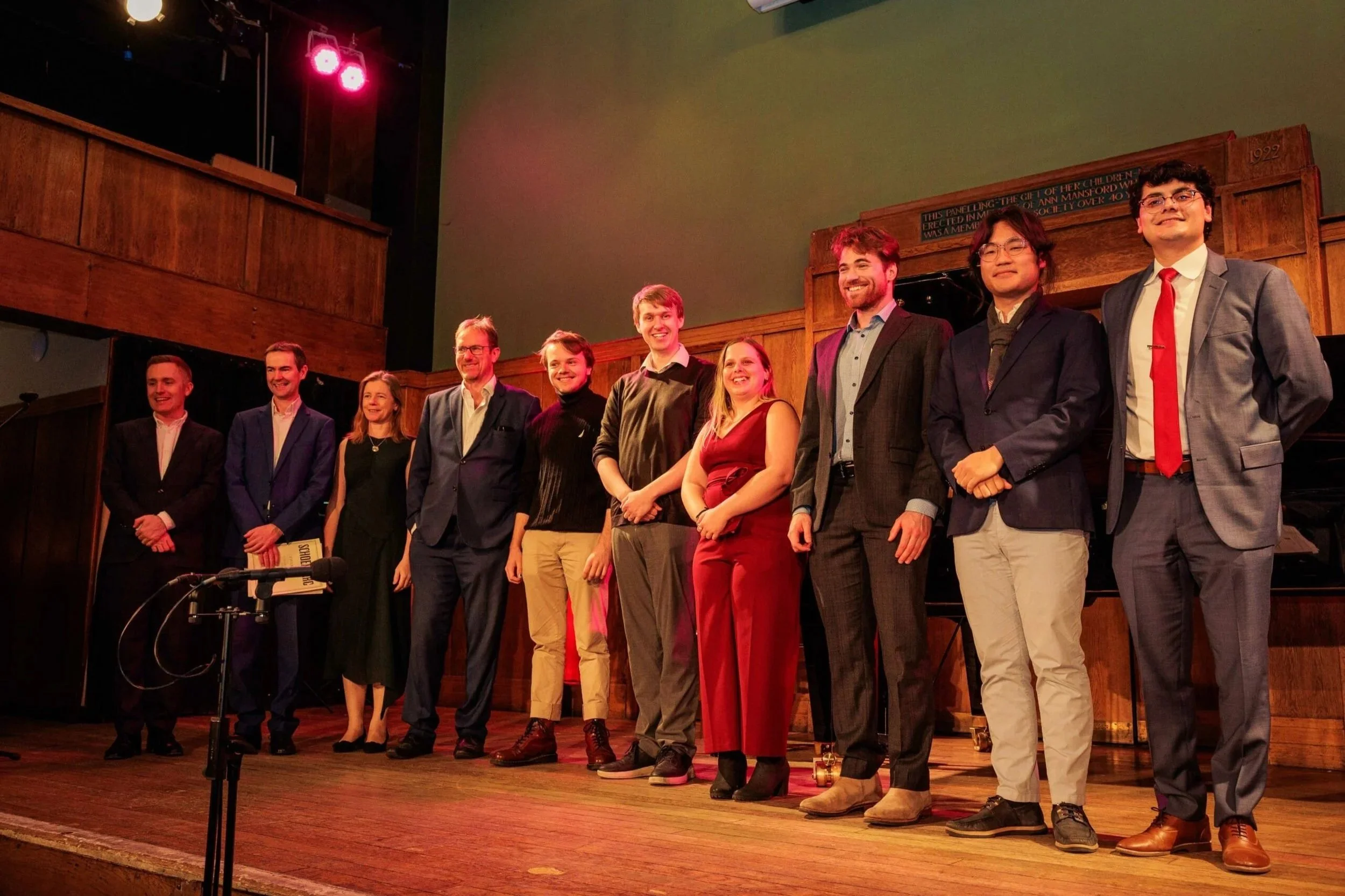
There have been other solutions. In July 2026, Riot Ensemble made a decision regarding their yearly Call for Scores that I hugely admired: waiving their £10 application fee in favour of closing their portal once a certain threshold of applications had been reached. This kind of compromise makes sure an organisation’s financial resources don’t get too stretched, and that juries’ workloads are manageable — while also making sure that the opportunity to submit, compete, or establish oneself, isn’t locked behind a paywall.
Of course, the best solution — one propagated by many composition, performance, and orchestral programmes — is to simply have them free to enter. We’re so lucky to have a plethora of opportunities in this country (see Alternative Classical’s list of 20 Composer Schemes), run by supportive organisations such as the Royal Philharmonic Society, London Symphony Orchestra, Britten Sinfonia, Royal Liverpool Philharmonic Orchestra, and many, many others. I’m hugely grateful to these brilliant organisations, alongside many others across the UK (and across the world), that actively put in the effort to equitably support composers and performers. You’re doing amazing, important, and vital work — and far too often, us composers don’t give you the credit that you deserve.
There’s always more to be done. I’d love to see more organisations actively commit to Sound and Music’s Fair Access Principles. It would be amazing to see these kinds of conversations, alongside many others, being actively discussed by professional bodies that represent our interests (I know there are a few happening as I write this).
And perhaps, there’s a wider question to be had about resources: making sure the support is there for smaller, less well-funded organisations, so they can get their initiatives off the ground without resorting to passing costs onto artists.
Most importantly: this isn’t about pitting artists and organisations against each other. We’re all on the same team, and we all want the same thing: to support, champion, and advocate for early-career composers and performers not just to survive, but thrive. I don’t think the solution is to tear anyone down (especially not the institutions we admire), but rather build ourselves up — to be able to support each other and advocate for change on a sector-wide level. It’s up to us to build the world we want to see.
UPDATE — 18 NOVEMBER 2026: Following the publication of this article, Britten Pears Arts have chosen to remove their application fee from their 2027 Young Artist Programme (read their full statement). As a longtime admirer of the Britten Pears Young Artist Programme, I (and I imagine so many others!) are so grateful that they’ve chosen to listen to the concerns of so many composers and organisations — and I’m glad they’ve chosen to continue setting the benchmark of what real support for composers and performers can look like. If you’ve considered applying for their Young Artist Programme, I’d highly recommend doing so — the deadline is 10 December.

Zygmund de Somogyi (they/them) is a British-Filipino composer, interdisciplinary artist, and music journalist. Drawing from their punk rock background and DIY ethics, they employ a uniquely multifaceted approach to composition across contemporary classical, opera, theatre, film, and electronic music. Zygmund was a Royal Philharmonic Society composer of 2025, and is currently Resident Composer for Festival ADAR in Asturias, Spain. Alongside composition, Zygmund is also artistic director of PRXLUDES - a contemporary music magazine and promotional organisation dedicated to promoting early-career composers.


Upcoming events…