
“Bouncing Back” After Having a Baby in the Classical Music World
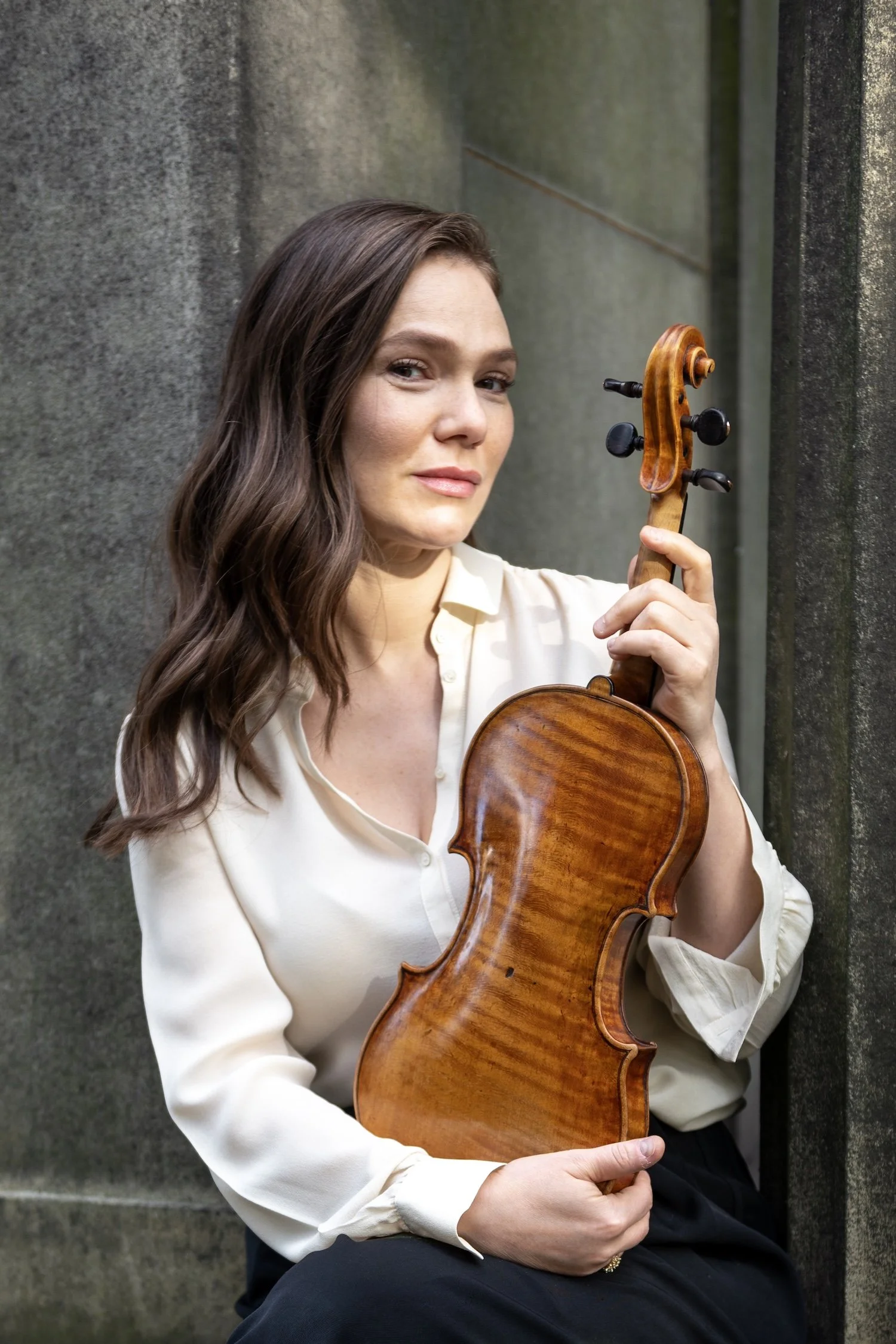
Tamsin Waley-Cohen, violinist and mother to two young children, reflects on the realities of building a career in music while raising children, dispelling the myth that it’s possible to “bounce back” after having a baby in the classical music world. This article is part of our honesty series, which includes discussions around performance anxiety, mental health struggles, and what success looks like in the classical music industry.
If you enjoy our content, you can buy us a coffee, join our mailing list or send our site to a friend. Thank you!
Why do we want women to “bounce back” from motherhood? It’s the prevalent language and it tells us that motherhood is not somewhere that it’s desirable to be. It tells women that to be a good, successful mother, they need to get back to their former selves, their former bodies, the former rhythm of their lives, and not let the nuisance of motherhood impinge upon them, or show in any way.
A quick look at the language that we use for mothers tells us that being a mother is not desirable in a world that values plenty of shiny, sexy productivity. We have the mumsy clothes, the slummy mummy, the “she’s just a mum now”, the mother hen, leading to the hen-pecked husband, and of course the MILF (thanks frat boy comedies of the 00s for imbedding that one).
Parallel to this pervasive language, anyone who has ever become a mother will know that whatever the subject, you’re damned if you do and damned if you don’t, and work is still a hot button topic. Working mothers hear “who’s bringing up your children, poor things, they must never see you”. ‘Stay at home mothers’ are considered lazy, boring, old fashioned, leeching off their husbands. Judgement abounds.
There’s often great economic pressure for musicians to get back to work after having a baby. The maternity allowance for self-employed mothers is tiny. It is not related to what you earned before you were on maternity leave. If you are not up to date on your National Insurance payments it can be as low as £27 a week, which will barely buy you a box of nappies, and the maximum that it can be is £194.32 a week, for up to 39 weeks, but not if you go back to work. That is well below the living wage. It is shockingly low, and certainly not enough to live on. Therefore, many musicians are forced back to work early, in order to be able to pay their bills, despite that this incurs new bills of childcare, if there is no family around, and can be traumatic for both mother and baby. Neither of my babies travelled well, liked new environments, or schedules that they couldn’t dictate.
You can’t reason with a baby. They simply need what they need when they need it. Taking them on tour is exhausting and expensive, and many mothers are not willing or able to leave their young babies at home, especially if they are breastfeeding.
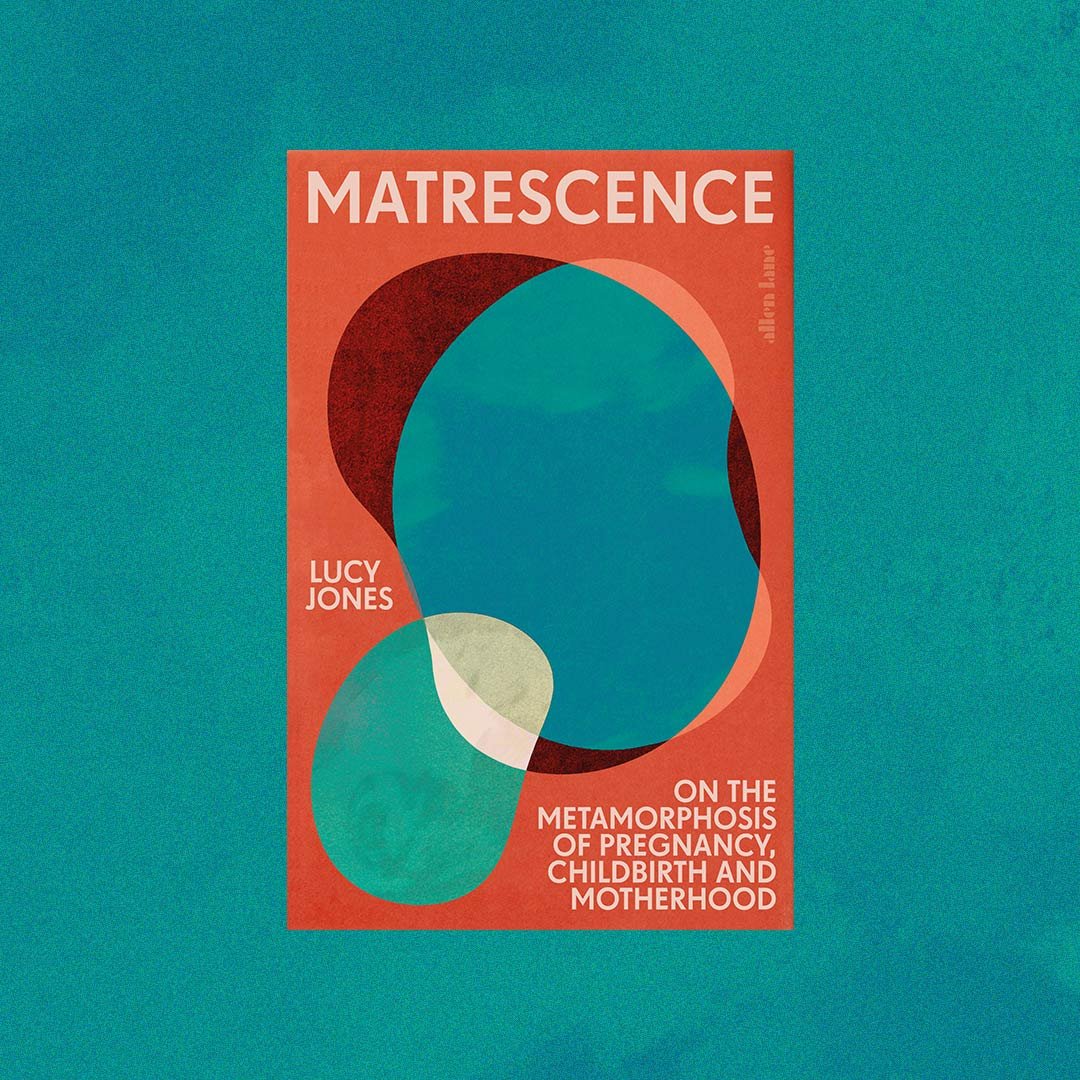
There’s now extensive data on the huge changes that take place in the brain of the new mother, and indeed, of any new caregiver, male or female. The opposite of the dreaded “mum brain”, or “maternity lobotomy”, which anyone with severe sleep deprivation over an extended period will experience, we now know that the mother’s brain is pruned, strengthened and optimised for better empathy, decision making, prioritising, and problem solving. In other words, the mother’s capacity, emotionally, intellectually and spiritually is in fact increased. This is the beginning of the now increasingly popularised term, Matrescence. Akin to the brain changes seen in the 5-7 years of adolescence, the changes in a mother’s brain are just as significant, but take place over just a few months. Whilst these brain changes are significant and real, a new mother will also discover that there has been seismic physical, psychological, hormonal, societal and relational shifts, and that absorbing and processing these changes also takes time and energy. That’s not the end though.
Matrescence is a long and winding process which continues through the whole career of mothering, as the children grow and their needs change too throughout their lives. It’s a relational and psychological as well as biological process.
Follow us on Instagram @alterclassical
Being a classical musician also comes with scrutiny of the body, and the female body in particular. Despite the fact that unlike dancers or actors, our bodies are not themselves an expression of our art as our medium is sound, the industry relies heavily on the pouting and sexy female star. Sex sells, after all. In today’s climate, where the aesthetic of extreme thinness and extreme youth is the benchmark, and we want women to be nubile, childlike, fragile and small, I know of prominent soloists who have injured themselves working out so hard and starving themselves so that their bodies would quickly fit back into their slinky concert dresses, because that’s how they could still be the desirable product to be sold. It’s worse for singers, with opera roles demanding a svelte physique and the pressure to fit back into your old measurements for costume departments quickly after having a child.
I myself felt immense internal pressure to slim down. I felt disgust with my body after my first child in particular, and the idea that people would be staring at my larger frame whilst I played a concert filled me with a dread, horror, and self-hate for not having ‘bounced back’ quickly enough. I had internalised the current beauty ideals and that I was effectively a product to be sold and consumed by my audience more than a person. What freedom it is to have finally cast that off! It was only after having children that I began to ask myself why our culture finds the traits of having borne new life so inherently repulsive, and why it is mocked and considered the height of unattractiveness. We all came into this world through our mothers. It’s the only way that there is. Instead of finding the creation of new life and the marks that it leaves to be a thing of wonder and beauty, our culture shames mothers and makes women whose bodies don’t conform to the “bouncing back” ideals feel unworthy and lesser.
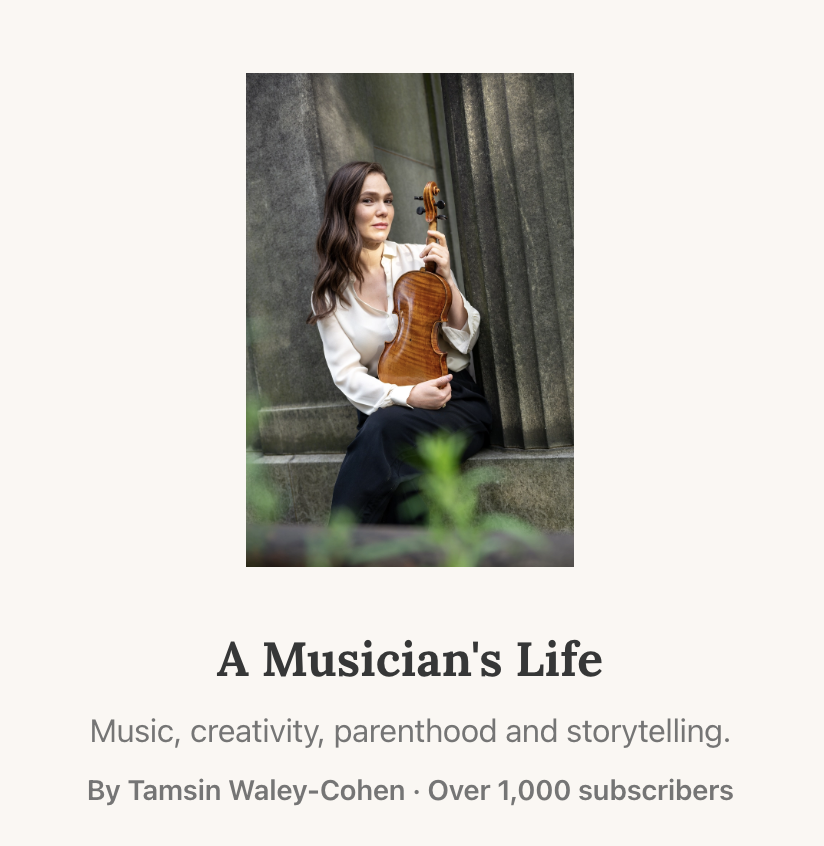
Tamin Waley-Cohen’s Substack, A Musician’s Life
Why are we so uncomfortable with motherhood? Why do we still want to pretend that it’s not happening? When people say to me that issues around mothering are “women’s issues” I reply they most certainly are not. They affect every single one of us. We all have mothers, know mothers. That we want to hide mothers away should be a source of shame to our society and is a sign of a sickness in our civilisation.
Here it is - there’s no going back, bouncing or any other way. The only way is forward. It has taken me a few years to find a way to bring the two parts of myself back together as one, my artist self, and my parent self. The internal schism that I felt after my first child was born was intense and was certainly a factor in suffering from postnatal depression, exacerbated by the advice I had always been given not to “ruin” my career by going off and having children, with female artists such as Ida Haedel held up as the ideal, married only to her art. Yet I don’t identify with the ideas of “putting yourself back together” or “getting back to normal”, any more than “bouncing back”. These seem false and lack recognition of the immense changes which occur when you become a mother.
The previous normal is a distant land, and there’s a new rhythm to life, in which the only constant is change. Rather I would say that it’s more akin to the caterpillar, which dissolves completely in the chrysalis, to emerge back into the world as the butterfly.
If you enjoyed this article, check out Tamsin Waley-Cohen’s Substack, A Musician's Life, which “explodes the myth that motherhood and serious art are in opposition".
Tamsin Waley-Cohen is a British-American violinist known for her distinctive musicianship, adventurous programming and commitment to contemporary music. She has performed internationally as a soloist and chamber musician, collaborating with leading orchestras, ensembles and composers. Tamsin is particularly passionate about championing new music. Recent highlights include performing Lullabies with pianist Cordelia Williams at the Southbank Centre and giving the world premiere of Freya Waley-Cohen’s Violin Concerto, written for her, with the BBC National Orchestra of Wales at the Aldeburgh Festival.


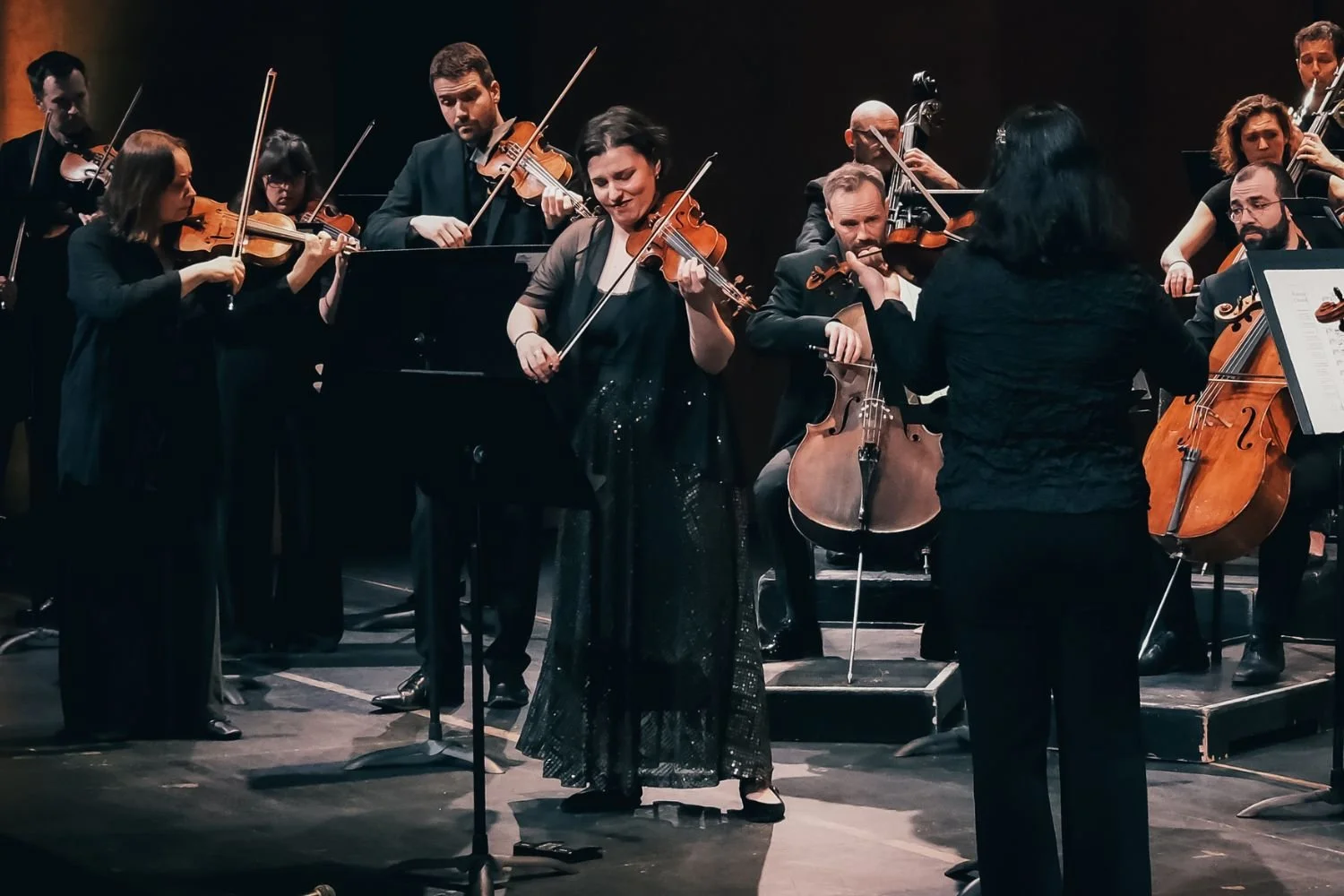


Tamsin Waley-Cohen discusses the myth of “bouncing back” after having a baby.