Reading Essentials for Aspiring Composers
Along with attending workshops, studying scores and simply trying things out, aspiring composers may feel overwhelmed by the reading resources available to them and they may not always resonate with every composer. But, when the right resources are found, it can be a game-changer towards refining your compositional process and expanding your creative arsenal. Here is a selection of books which are tried and tested by creatives which focus on specific areas such as orchestration, notation and productivity, or provide an informative overview of the overall compositional practice.
You may also be interested in checking out our Composers’ Hub, which provides a list of opportunities, awards, funding and bursary information, interviews with composers, concerts featuring world premieres, a list of UK composer schemes, and more.
Orchestration
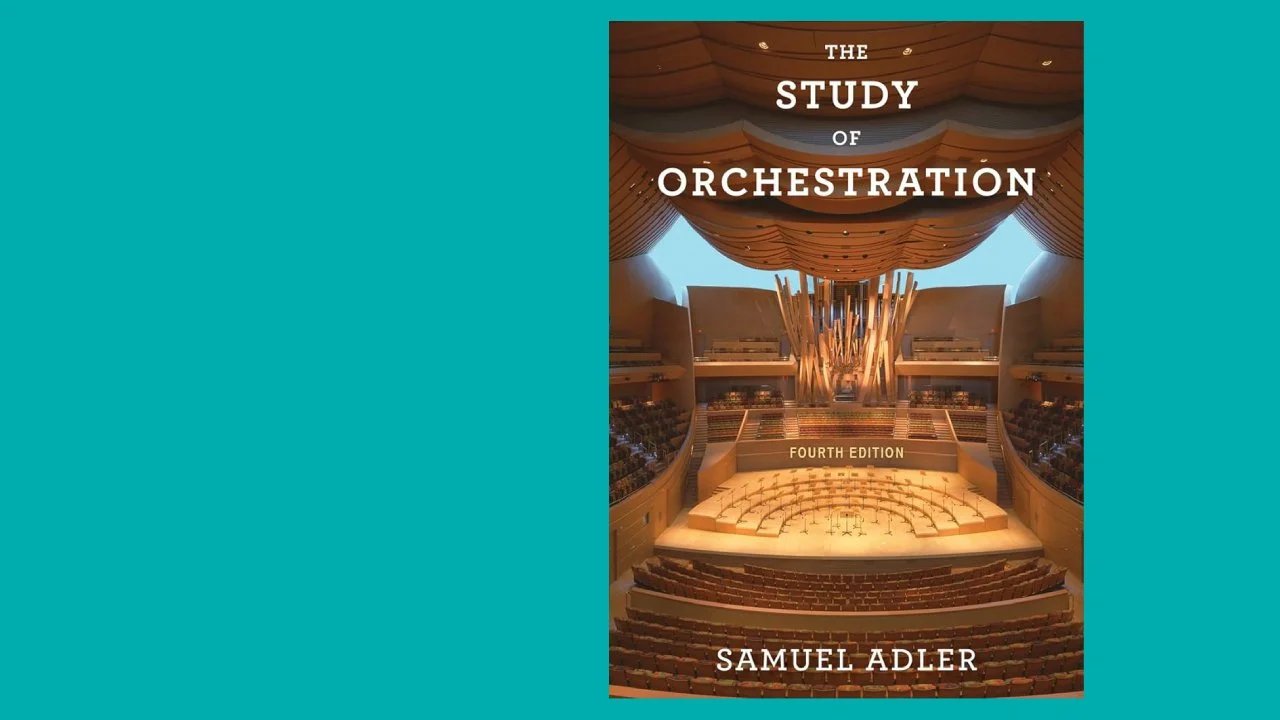
Samuel Adler, published in 2016 by W. W. Norton and Company
Order from Waterstones
Written by a renowned composer whose works have been performed by major orchestras around the world, The Study of Orchestration is the only text that explores the characteristics of orchestral instruments and shows how a master composer approaches orchestration.
“Whilst it is titled as an orchestration book - and there are chapters associated with such - I have found its best use is explaining the rudiments and fundamentals of each individual instrument in the orchestral family (timbral range and colours, limitations, techniques etc.) and it is almost always the first resource I open when tackling a new ensemble I am writing for.”
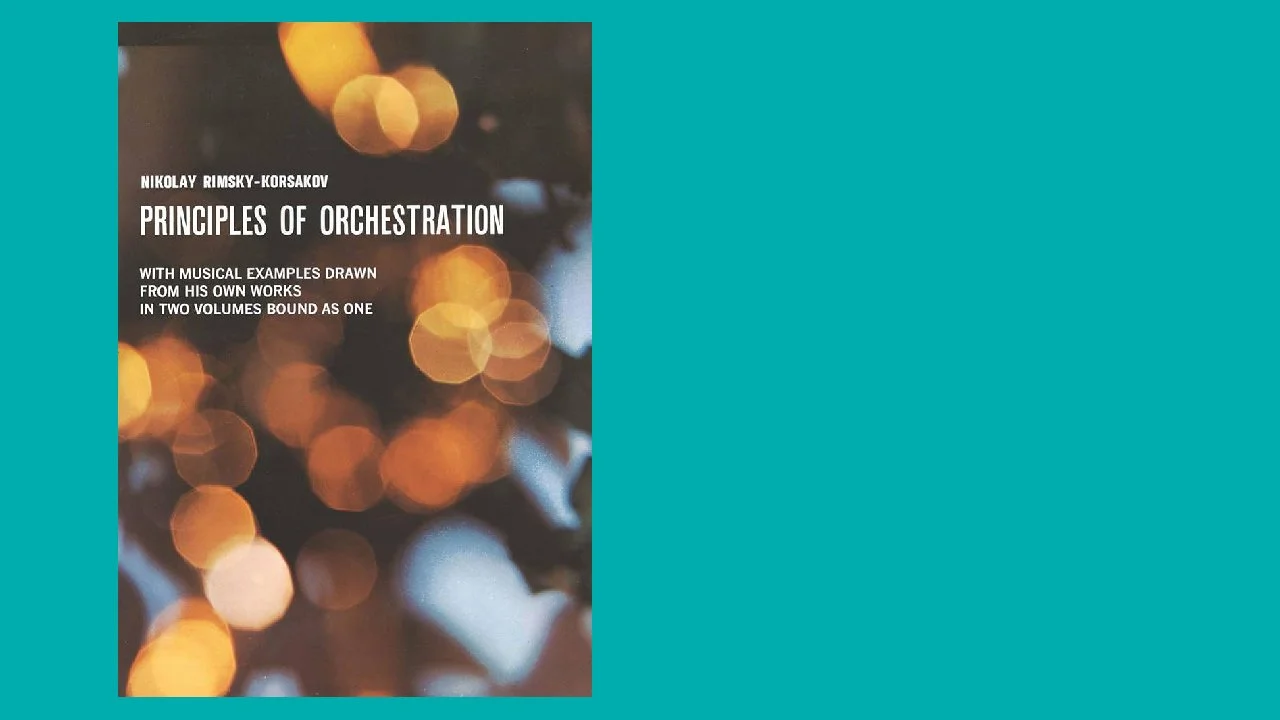
Nikolay Rimsky Korsakov, published in 1965 by Dover Publications Ltd.
Order from Bookshop.org / Waterstones
This book will undoubtedly be of value to any composer. In it, Korsakov aims to provide the reader with the fundamental principles of modern orchestration from the standpoint of brilliance and imagination, and he devotes considerable space to the study of tonal resonance and orchestral combination. In his course, he demonstrates such things as how to produce a good-sounding chord of certain tone-quality, uniformly distributed; how to detach a melody from its harmonic setting; correct progression of parts; and other similar problems.
“This is a fantastic resource which fills the gaps which Adler misses, making it an essential pairing for a composer’s desk. One drawback to note is it only uses examples from Korsakov’s own music - but again, Adler makes up for this with his examples.”
Harmony & Counterpoint
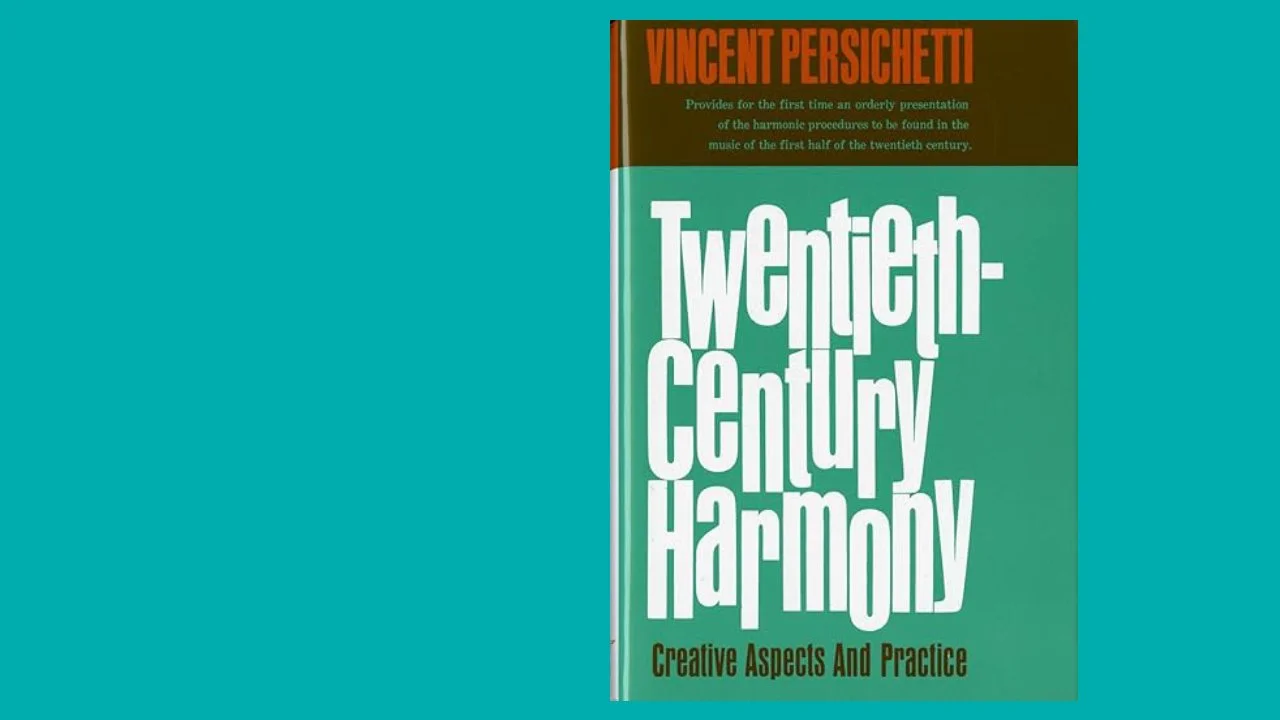
Vincent Persichetti, published in 1961 by W. W. Norton & Company.
Order from Amazon
Here for the first time is an orderly presentation of the harmonic procedures to be found in music of the first half of the twentieth-century. The author examines the nature of intervals in various contexts, discusses the modes and other scales employed in modern music, describes the formation and uses of chords by thirds, by fourths, and by seconds, of added-note chords and polychords; he deals with different types of harmonic motion, with harmonic rhythm and dynamic sand ornamentation, with harmonic behaviour in tonality, polytonality, atonality and serial composition.
“Despite its many reviews as the go-to book for harmony, it is not a book to learn simple harmony from - understandable as it is 20th Century harmony after all. Despite having read through the book, it still requires several read throughs and referencing when putting its teachings into practice. Once you manage to understand its pages, its influence and resourcefulness will only grow.”
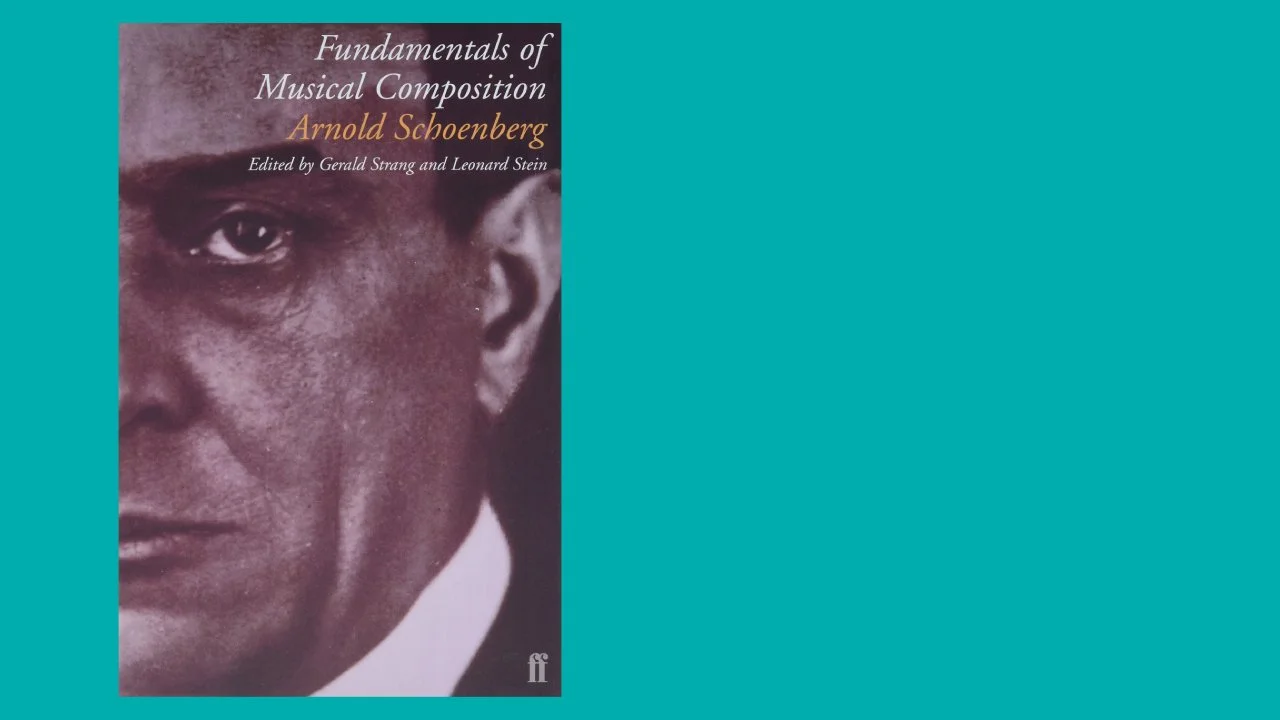
Arnold Schoenberg, published in 1999 by Faber & Faber
Order from Waterstones / World of Books
This book represents the culmination of more than forty years in Schoenberg's life devoted to the teaching of musical principles to students and composers in Europe and America. For his classes he developed a manner of presentation in which 'every technical matter is discussed in a very fundamental way, so that at the same time it is both simple and thorough'.
“If you’re looking for a resource away from ABRSM theory books, this, along with its music analysis and compositional tuition is a great fit, representing the culmination of Schoenberg’s compositional experience. Whilst it could be challenging to those with a limited theory knowledge, it has a variety of musical examples to help guide you through its teachings.”

Johann Joseph Fux, published in 1965 by W. W. Norton & Company
Order from Bookshop.org / Waterstones
The most celebrated book on counterpoint is Fux's great theoretical work Gradus ad Parnassum. Since its appearance in 1725, it has been used by and has directly influenced the work of many of the greatest composers. J. S. Bach held it in high esteem, Leopold Mozart trained his famous son from its pages, Haydn worked out every lesson with meticulous care, and Beethoven condensed it into an abstract for ready reference.
“Whilst recent textbooks are more refined, the core of this book is undisputed and its influence on classical composers is undeniable. Formatted as a conversation between a student and pupil, it starts progressing through the five species of counterpoint to reach four part composition and florid counterpoint.”
Notation
Elaine Gould, published in 2011 by Faber Music
Order from Bookshop.org / Waterstones / World of Books
This is the indispensable reference book for composers, arrangers, teachers and students of composition, editors, and music processors. In the most thorough and painstakingly researched book to be published since the 1980s, specialist music editor Elaine Gould provides a comprehensive grounding in notational principles. It covers everything from basic rules, conventions and themes to complex instrumental techniques, empowering the reader to prepare music with total clarity and precision.
“Despite perhaps being a worrying price tag for some, this book is a real treasure trove as its author is the former Music Editor at Faber Music during the height of notation exiting traditional dots and blobs during the 20th Century. Packed with examples, this book covers everything, down to the very minute details - even the length of note stems!”
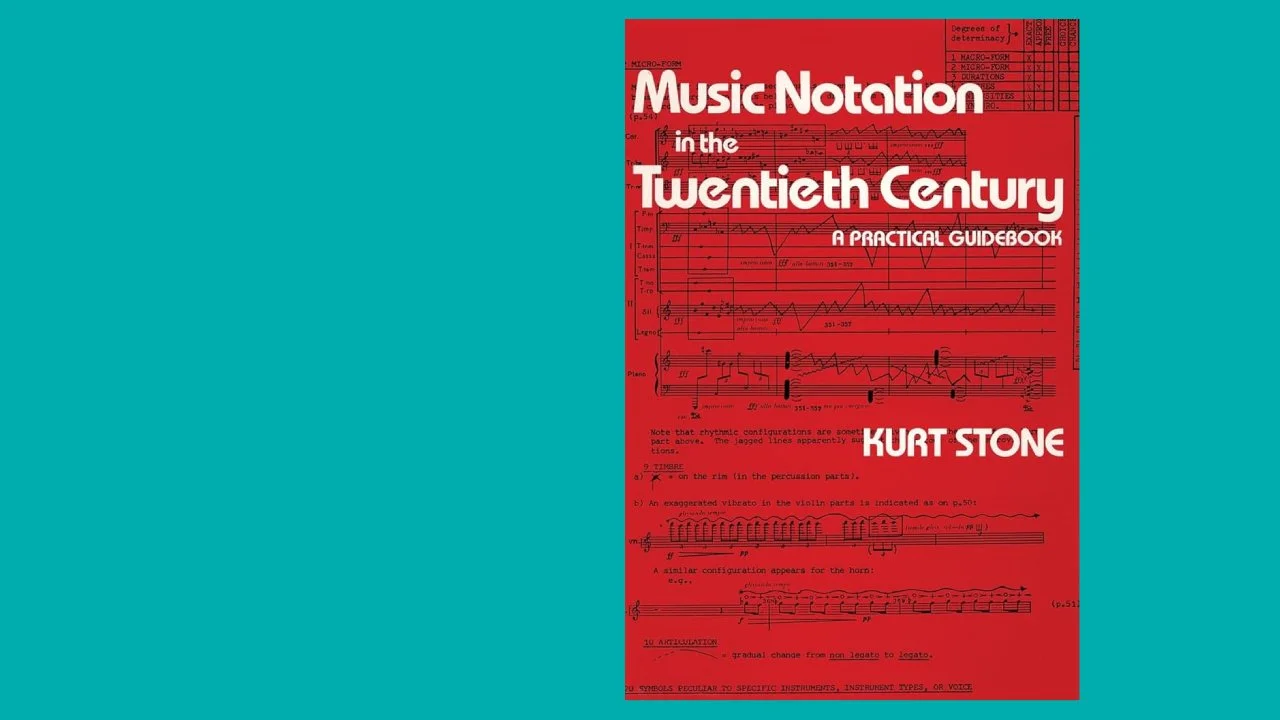
Kurt Stone, published in 1980 by W. W. Norton & Company
Order from Waterstones
Stone is undoubtedly one of the world's leading authorities on contemporary music notation and its problems. As head of the Index of New Musical Notation, he collected and categorised the myriad new devices appearing in published music of this century. In collaboration with professional performers and conductors, he evaluated these devices in order to determine their effectiveness in practical application. At the International Conference on New Music Notation 1974, a consensus was sought from the eighty participating musicians from eighteen different countries. The results have been incorporated into this volume in the clearest and most direct way.
“Organised to facilitate the location of specific information and for easy reference, this book is a minutely detailed index making it an additional and indispensable tool alongside Gould’s resource.”
Productivity/Mental Health
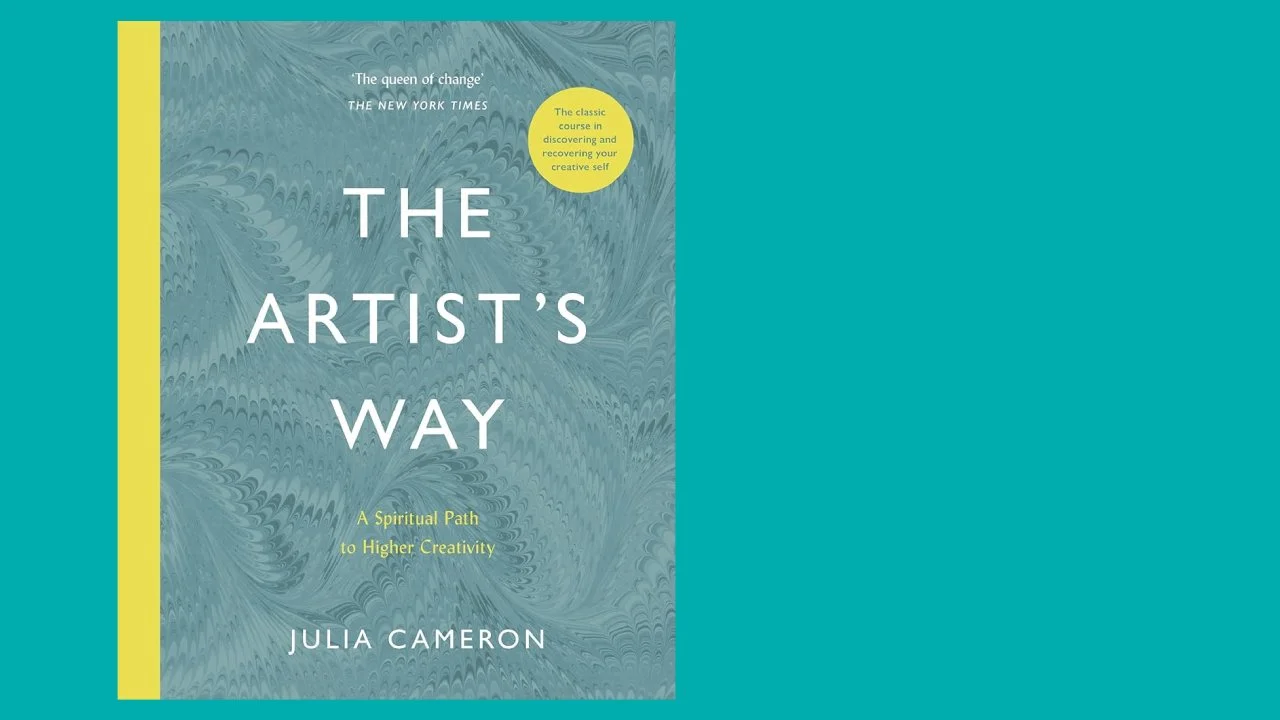
Julia Cameron, published in 2020 by Souvenir Press
Order from Bookshop.org / Waterstones / World of Books
The Artist's Way: A Spiritual Path to Higher Creativity is a 1992 self-help book by American author Julia Cameron. The book was written to help people with artistic creative recovery, which teaches techniques and exercises to assist people in gaining self-confidence in harnessing their creative talents and skills.
“Introduced to me by an actor, each chapter can be accompanied by an additional workbook allowing you to record and reflect week-by-week. Whilst not directly related to composition itself, in an age of technology and the destructive power faceless criticism holds, this is a resource sure to help with procrastination and the inevitable creative imposter syndrome.”
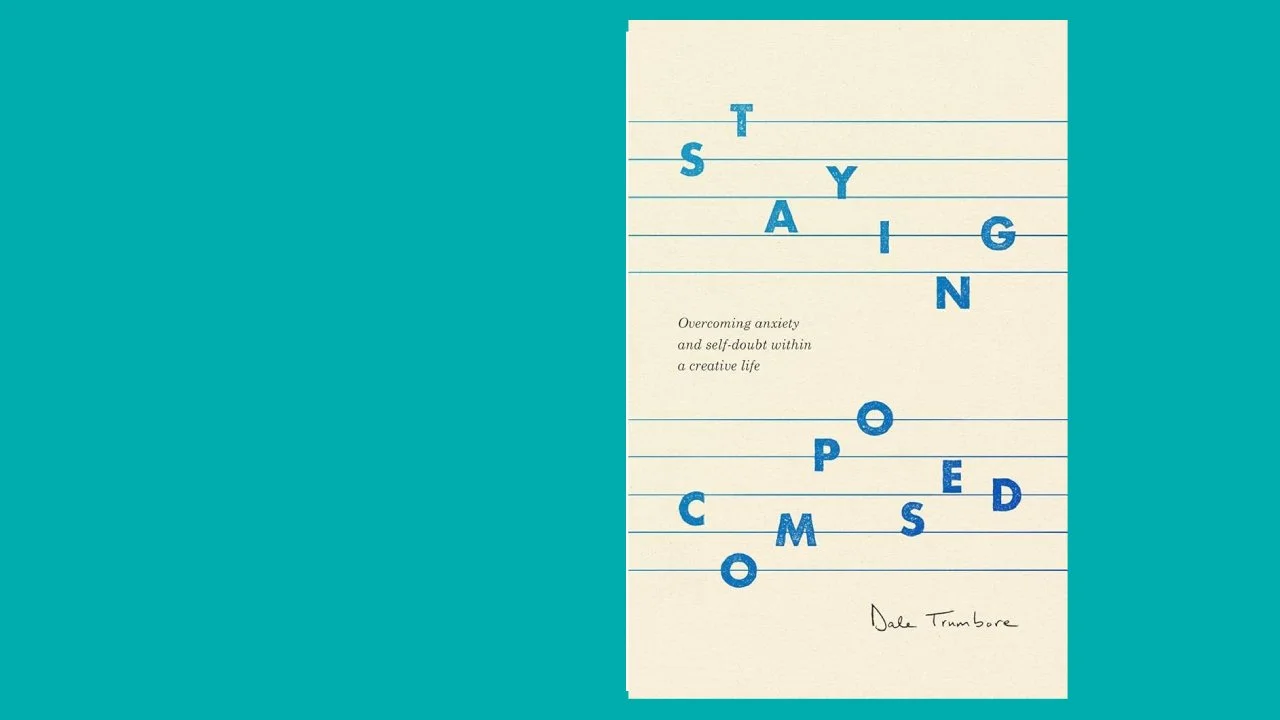
Dale Trumbore, published in 2022 by Yale University Press
Order from Waterstones
All artists have doubts and anxieties. What are yours? Managing procrastination, anxiety, and creative blocks? Knowing how to trust your work? Dealing with other people? Balancing the need to push through to the end of a work while keeping your health and sanity? Handling rejection . . . and your own success? Dale Trumbore has faced each of these issues as a composer who achieved her own definition of success by age 30.
“An ideal accompaniment to Cameron’s book, Trumbore breaks down each obstacle to a creative career and presents workable strategies for a long-range, manageable, and meaningful life in the arts.”
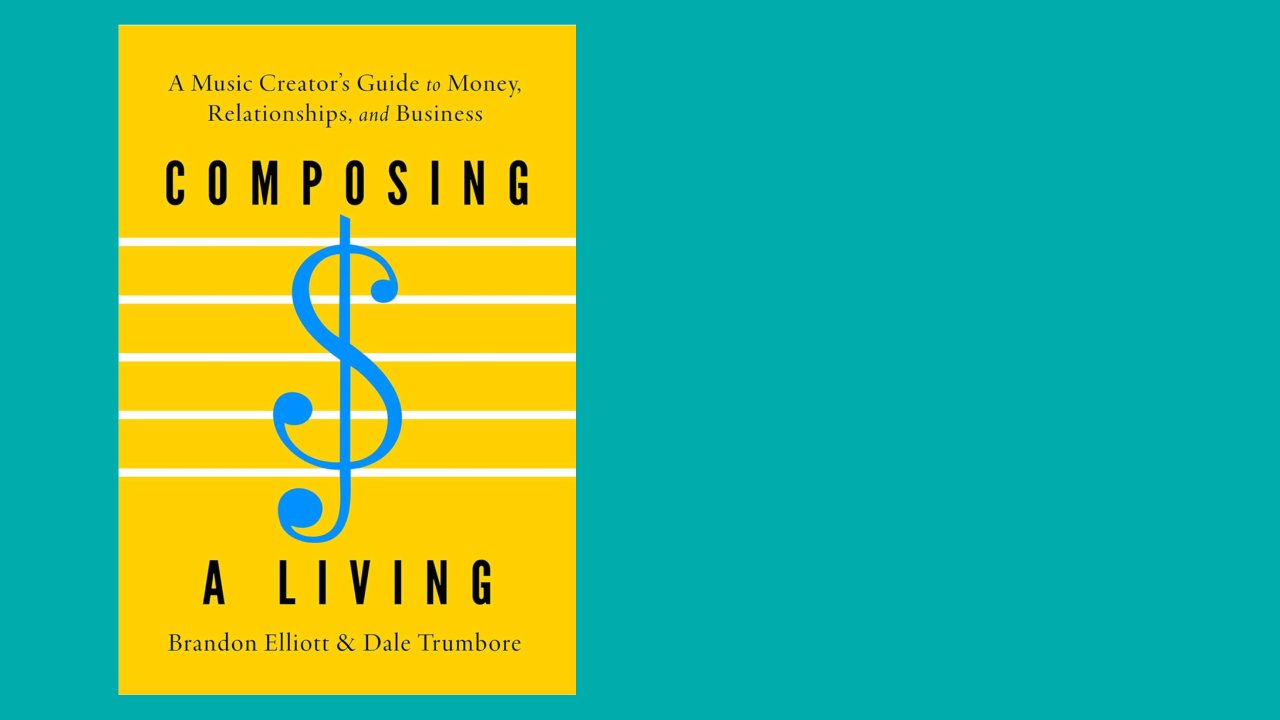
Composing a Living
Brandon Elliott & Dale Trumbore, published in 2025 by Oxford University Press
How do composers build sustainable careers, ensuring their work aligns with their financial goals and personal well-being? Composing a Living is a practical and empowering guide for composers navigating the intersection of music, money, and business.
Drawing on extensive industry experience and twenty-eight interviews with successful composers across genres, Brandon Elliott and Dale Trumbore offer comprehensive guidance on pricing work, negotiating contracts, understanding copyright, hiring a creative team, and diversifying income.

Matthew Elderton-Lewis Is an early-career composer who has been commissioned, performed, featured and workshopped by ensembles such as the Essex Symphony Orchestra, Britten Sinfonia, Phacelia Ensemble, Riot Ensemble, Chroma Ensemble, Trilogy Ensemble, The Choir of Royal Holloway, and Ligeti Quartet.
Receiving Second Prize for The Clements Prize for Composers 2025, he is determined to fight the ‘classical music’ stigma, offering a hand of reassurance to audiences who would otherwise be hesitant to discover new music.